
Crucial Measurements

For Existing Trusses

Three numbers that let us match new trusses to an older roof.

Adding on to an existing roof? The new trusses have to match the old ones exactly. Below is how we get that right, using three measurements taken straight off your current roof. Original plans help, but they rarely reflect what's actually on site, so field measurements are what we trust.

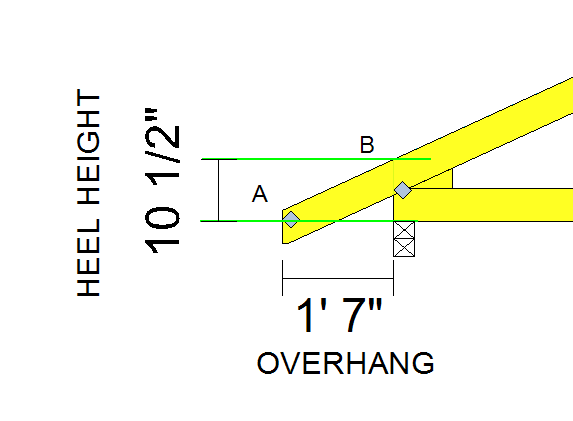
Truss heel diagram showing overhang and heel height
Measurement 01

Overhang & Heel Height

These two go together and define the shape of the truss heel where it lands on your wall. Overhang is the horizontal distance the truss extends past the outside wall; heel height is the vertical height of the truss at that same point.

How to measure: for overhang, measure level from the outside face of the wall to the end of the truss tail. For heel height, measure straight up from the top of the wall plate to the top edge of the truss.
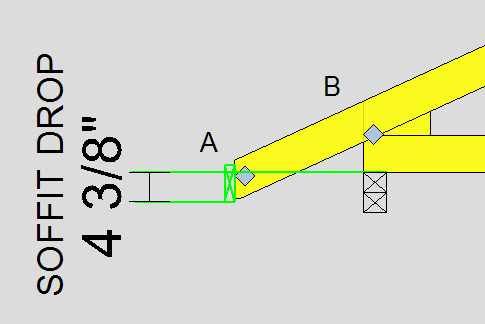
Diagram showing soffit drop relative to heel and overhang
Measurement 02

Soffit Drop

The vertical distance from the top of the wall to the underside of the soffit at the end of the overhang. Once we have the heel height and overhang, the soffit drop falls out of the geometry, but measuring it directly is a great cross-check.

How to measure: from the top of the wall plate, measure straight down to the underside of the soffit at the end of the overhang.

Measurement 03

Pitch of Roof

The steepness of the roof, written as rise over run. A 6 ⁄ 12 pitch rises 6 inches for every 12 inches you move across horizontally.

How to measure: hold a level out 12 inches from the roof's surface and measure straight down to the roof. That measurement is your rise.

GOT YOUR NUMBERS?

Send us your measurements along with your plans and we'll get a quote together for matching trusses.

Request a quote